
Collector practice · 6 MIN READ
Soft Detail Is a Question, Not an Automatic Wear Grade
Learn to separate missing detail from the reason it is missing, and make a more useful request for an in-hand opinion.
In this guide 5 sections + questions & sources
Ask what happened to the surface
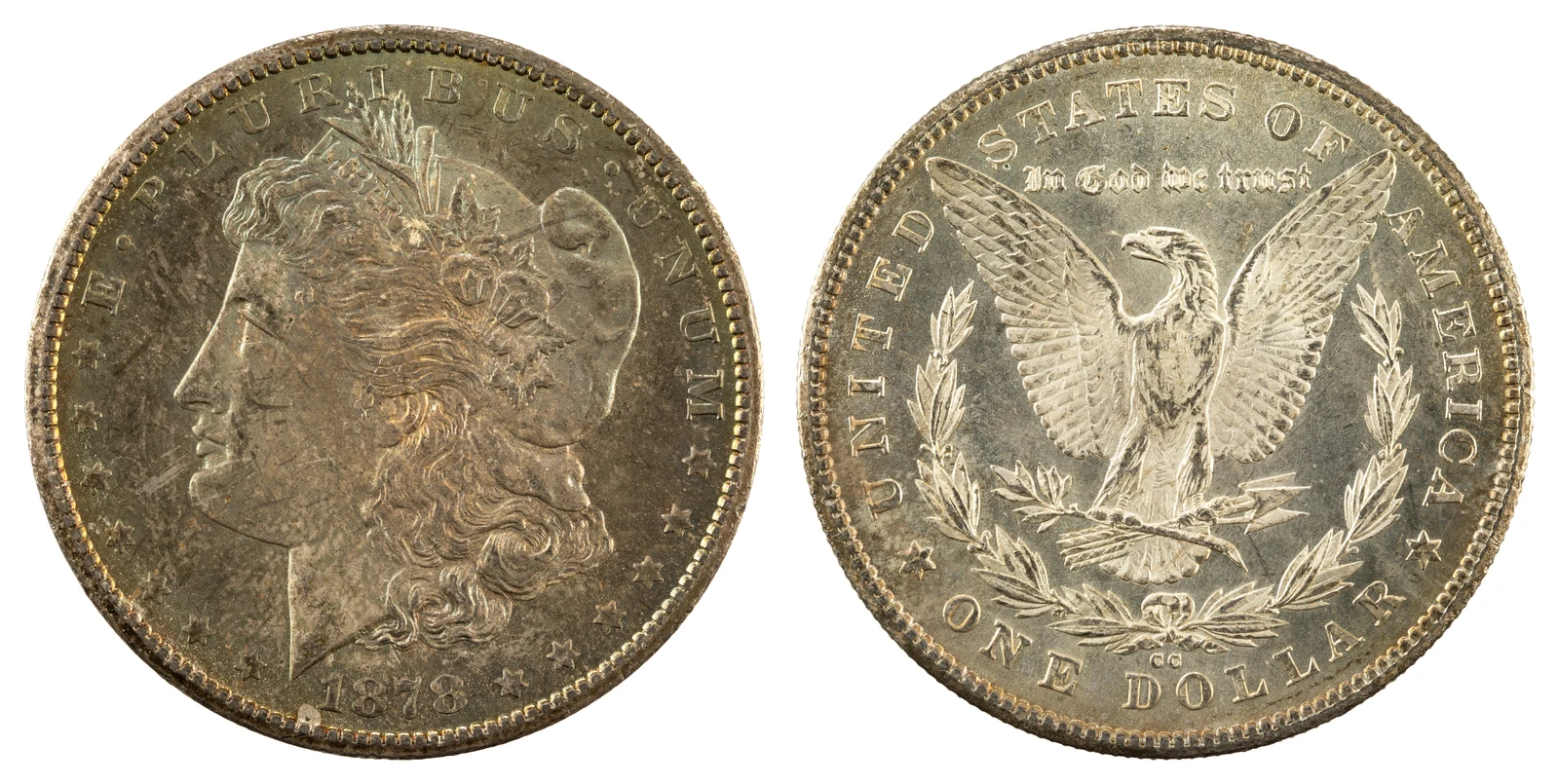
Imagine looking at a coin whose central hair is much less distinct than the surrounding letters. The tempting shortcut is to translate that missing detail directly into a grade. That skips a necessary question: was the detail fully formed in the first place? PCGS explains that insufficient striking pressure, die spacing, worn dies and variations in the blank can all affect how completely a design appears.
Wear is a different process from incomplete manufacture. The distinction matters even if your immediate goal is only to describe a family coin accurately. Write down the observation before naming its cause: central hair weak, nearby lettering sharp, bright patch visible at one angle. That description can be checked. Calling the same area definitely worn makes an interpretation sound like an observation.
Do not turn the distinction into a rule that all softness is harmless. An originally weak coin may also circulate, acquire contact marks or be altered later. More than one process can be visible on the same object.
Compare like designs under useful light
A reference coin should share the relevant design and production context. Comparing a softly made business strike with an exceptionally sharp proof encourages the wrong expectation. Look for clear photographs and reliable descriptions of the same issue, not simply the sharpest coin returned by an image search.
Use steady lighting and examine both sides without touching the surfaces. Changing the viewing angle can help reveal whether an apparently flat patch behaves differently from the surrounding area. PCGS discusses texture and luster as part of the distinction between strike and wear; these are contextual clues, not a home test that delivers a guaranteed result.
Keep the viewing conditions consistent. If one photo uses a hard spotlight and another soft diffuse light, differences in brightness may come from photography. Ask for a short, unfiltered movement under consistent lighting when still photographs leave an important question unresolved. A video can improve the evidence without replacing an experienced in-hand assessment.
Worked comparison: two fictional soft centers
This is a fictional observation exercise, not a diagnosis of pictured coins. Coin A has incomplete central detail, but the texture appears consistent with nearby protected areas as the coin turns. Coin B has similar softness, plus a patch that looks smoother and changes brightness differently from its surroundings. Both were advertised with the same two-word description: sharp coin.
For A, a useful question is whether the issue commonly shows incomplete central striking and whether the observed surface supports that explanation. For B, ask whether the change could represent friction or another surface problem. The correct result of the exercise is two better questions, not a pair of grades.
If the seller supplies only a different heavily illuminated photograph, the uncertainty remains. You can record that limitation, request a qualified opinion, or decline to make a condition-dependent decision. There is no need to invent certainty simply because the listing has a deadline.
Keep the other grading factors in the picture
Strike is not the entire condition assessment. PCGS identifies surface preservation, luster, strike and eye appeal as relevant considerations for uncirculated coins. A boldly struck example can still have distracting marks; an attractive coin can still show friction. Neither exceptional detail nor a pleasant color cancels the rest of the evidence.
Make a short observation sheet rather than assigning yourself an instant grading score. Divide it into design completeness, surface interruptions, light response and limitations of the available view. That separation keeps one impressive feature from dominating the discussion.
Use this sheet to explain your question to a knowledgeable dealer or grading specialist. Saying that you cannot distinguish central softness from friction is more informative than asking whether the coin looks good. The specialist can then address the actual uncertainty rather than guessing what part of the coin concerns you.
- Identify the issue and finish before selecting a comparison.
- Describe the location and appearance of the soft area.
- Inspect the rest of both sides for supporting or conflicting evidence.
- Record what the photographs do not reveal.
Buy the documented condition, not the explanation you prefer
A seller's explanation should be specific enough to evaluate. Weakly struck is useful when supported by issue knowledge and surface evidence; it is not a universal response to every missing feature. Equally, a buyer should not dismiss an interesting coin simply because it lacks the appearance of a different manufacturing format.
If a proposed price depends heavily on an unworn grade, unresolved friction is material. Keep that uncertainty visible when comparing the coin with other examples. Do not silently move it into the same comparison group as certified coins with a condition the raw example has not established.
The practical reward is better judgment, not perfect grading from a screen. You learn when a small area deserves closer inspection, when a comparison is inappropriate and when the available evidence has reached its limit. Sometimes the most accurate note is simply that the cause of softness remains unconfirmed.
COLLECTOR FAQ
Questions worth asking
Can an uncirculated coin have weak detail?+
Yes. Incomplete striking can leave detail weak before circulation. That possibility does not establish that a particular soft coin is uncirculated; its remaining surfaces and issue context still need assessment.
Does luster automatically prove there is no wear?+
No. Study where it remains, whether it is interrupted and what the surrounding surface shows. A single bright photograph does not settle the condition of the whole coin.
Should I clean a patch to see whether it is wear?+
No. Do not change the surface to answer a grading question. Preserve its present state and seek a qualified assessment if the distinction matters.
KEEP LEARNING
Take the next step.
Build your coin knowledge →Compare the full auction cost →Inspect certified-coin claims →Browse all collector articles →NumisTrends provides educational information, not financial, legal, tax, grading, or appraisal advice. Verify the exact item and current market before a transaction.