
Buying decisions · 6 MIN READ
Raw or Certified? Decide Which Kind of Purchase Fits the Job
A practical decision framework for paying for an existing opinion, commissioning one later, or choosing a different coin.
In this guide 5 sections + questions & sources
Name the question you are paying to resolve
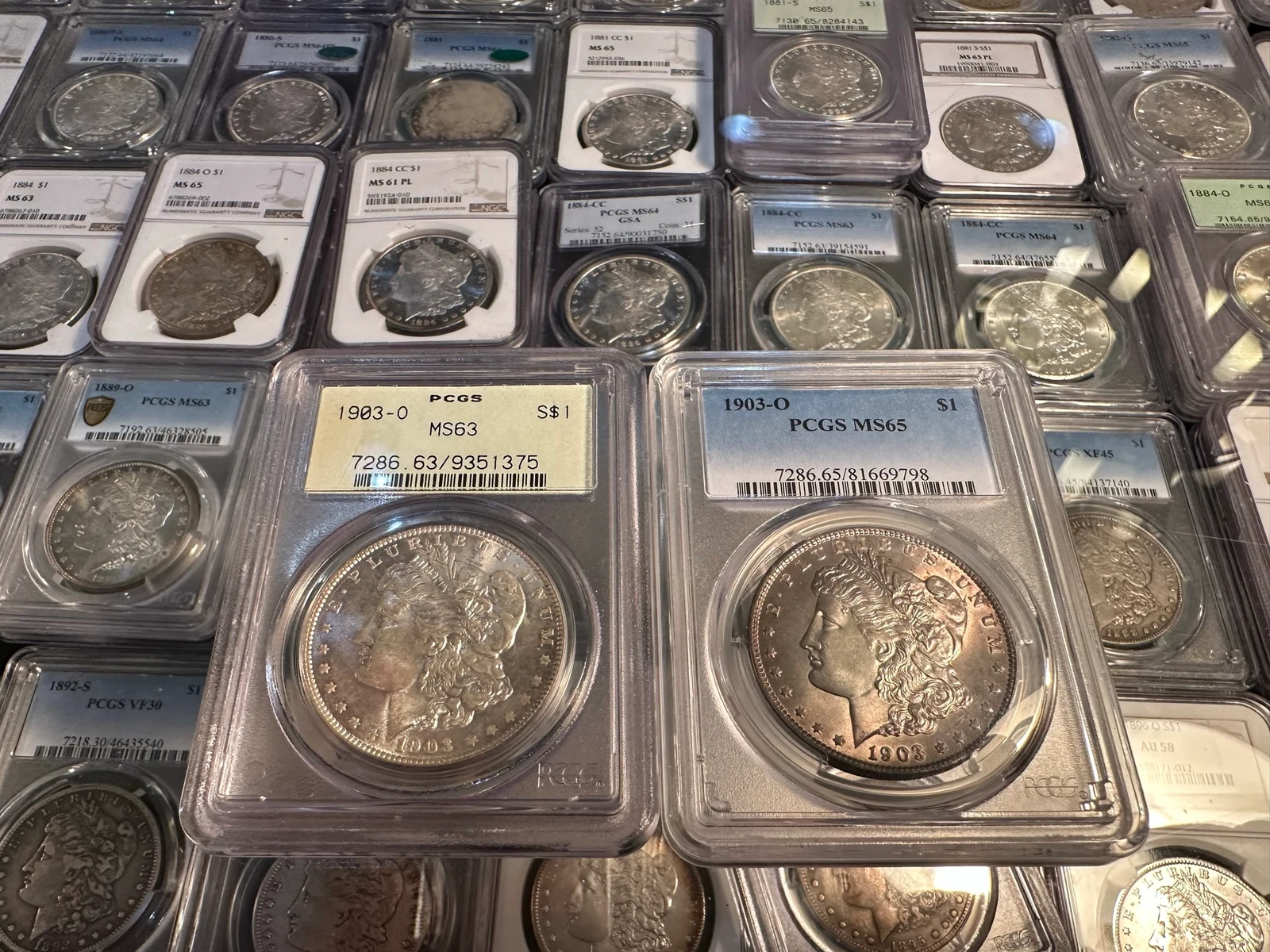
A raw coin is outside a third-party grading holder; that fact alone does not establish its quality or authenticity. A certified coin comes with a service's stated opinion and identifying record, subject to that service's scope and terms. Neither description tells you whether the asking price suits your purpose.
Start by writing the uncertainty in plain language. Is it the coin's identity, a possible alteration, the assigned condition, a variety attribution, or simply your unfamiliarity with the series? Different questions may call for different expertise. 'I want a slab' is less useful than 'I need a reliable opinion on the attribution before paying for it.'
NGC describes certification as a process involving grading and encapsulation rather than merely placing a coin in plastic. Determine whether the service you are considering evaluates the question that matters to you. A holder whose label does not address a claimed variety is not evidence that the variety has been confirmed.
Compare three routes, not just two price tags
Your choices are usually broader than raw versus certified. You can buy an already certified example, buy a raw example and keep it raw after suitable review, or buy raw and later submit it. A fourth choice—waiting for a better-understood opportunity—is often worth keeping visible.
For each route, consider how you will inspect the actual coin, what the seller discloses, and what recourse the transaction offers. Those questions remain relevant even if a grading service is involved. Certification and the seller's return terms are separate parts of the purchase.
Already-certified coins let you evaluate the stated outcome before buying. A raw-to-submission plan leaves that outcome unresolved while you incur purchase and service costs. If the purchase only seems attractive at one hoped-for grade, your analysis depends on a result that has not occurred. Price the uncertainty honestly rather than treating that grade as already earned.
Include the complete submission cost
Check the current service page for eligibility, membership or submission arrangements, grading tier, handling, shipping, and optional attribution services. NGC's published fees explicitly separate handling and shipping from the per-coin grading charge. The headline grading fee is therefore not always the full cost of the project.
Build a small cost sheet before deciding. Include the purchase total, the submission expenses you actually expect, and any professional screening fee. Distinguish a necessary service from a decorative label option. Allocating shared shipping across a batch can help planning, but do not count on a batch that you have not yet assembled.
Time also matters. NGC describes turnaround times as estimates rather than guarantees. If your plan requires the coin back for a particular event, verify realistic timing and retain a contingency. A deadline does not become safer because the projected price difference looks appealing.
- Purchase price plus the transaction's applicable charges.
- Grading, handling, attribution, and submission arrangements.
- Outbound and return shipping under appropriate current terms.
- Unresolved outcome, timing, and any follow-up decision.
Worked decision: an $85 difference is not free money
Consider a fictional collector comparing two coins of the same issue. A raw example costs $180 delivered. An already certified example at the collector's desired grade costs $265 delivered. The visible difference is $85. These are invented teaching prices, not a market comparison or suggested value.
The collector's estimated submission-related expenses total $55, including the services and shipping used in this example. Buying raw and submitting would therefore commit $235 before any unexpected expense. That leaves a $30 difference from the already certified option—not $85. More importantly, the raw coin's eventual grade and eligibility remain unknown.
If the raw coin receives a different grade, a Details result, or no conclusive opinion, the collector has not purchased the same outcome as the $265 example. The right question is whether the raw coin is desirable at the $235 commitment even with a less favorable result. If not, the plan is relying on grading success rather than a satisfactory purchase as it stands.
Match the route to your collecting purpose
For a modest teaching group or an album assembled for personal enjoyment, paying for individual certification may not answer a question important enough to justify the expense. For a purchase involving unfamiliar attribution or a consequential condition claim, professional evaluation may be central to the decision. There is no universal dollar threshold that fits every coin and collector.
Read current guarantee terms rather than assuming the word 'certified' means lifetime, all-purpose protection. NGC's terms include eligibility requirements and exclusions and do not promise investment performance. Consult the relevant service directly about a specific coin or unresolved guarantee question.
Finish with a written decision rule: what must be established before payment, what uncertainty you accept, and what would make you decline. This article is about selecting a purchase route. Once you choose a certified coin, verification of the actual coin, holder, and record remains a separate task.
COLLECTOR FAQ
Questions worth asking
Should every inherited or older coin be submitted?+
No automatic rule follows from age or inheritance. Identify the question a submission would answer and compare its full cost with the importance of that question. Professional screening may help prioritize.
Can I budget using the grade I hope a raw coin will receive?+
You can model it as one possible outcome, but not as a fact. Also test a lower grade, a Details result, or an unresolved attribution. A plan that only works in the best case is fragile.
Does certification establish a fair purchase price?+
No. It provides information within the service's scope. The price still needs comparison with genuinely relevant transactions, the particular coin's appearance, and the terms under which you are buying.
PRIMARY SOURCES
Verify the details.
NGC: Authentication and Grading Process ↗NGC: Services and Fees ↗NGC: About NGC Grades ↗NGC: Guarantee and Exclusions ↗KEEP LEARNING
Take the next step.
Build your coin knowledge →Compare the full auction cost →Inspect certified-coin claims →Browse all collector articles →NumisTrends provides educational information, not financial, legal, tax, grading, or appraisal advice. Verify the exact item and current market before a transaction.