

Coin knowledge · 6 MIN READ
Proof or Prooflike? Separate How a Coin Was Made from How It Looks
Reflective fields can mislead. Use production identity, service terminology, and the exact issue before comparing condition or price.
In this guide 5 sections + questions & sources
Begin with production, not shine
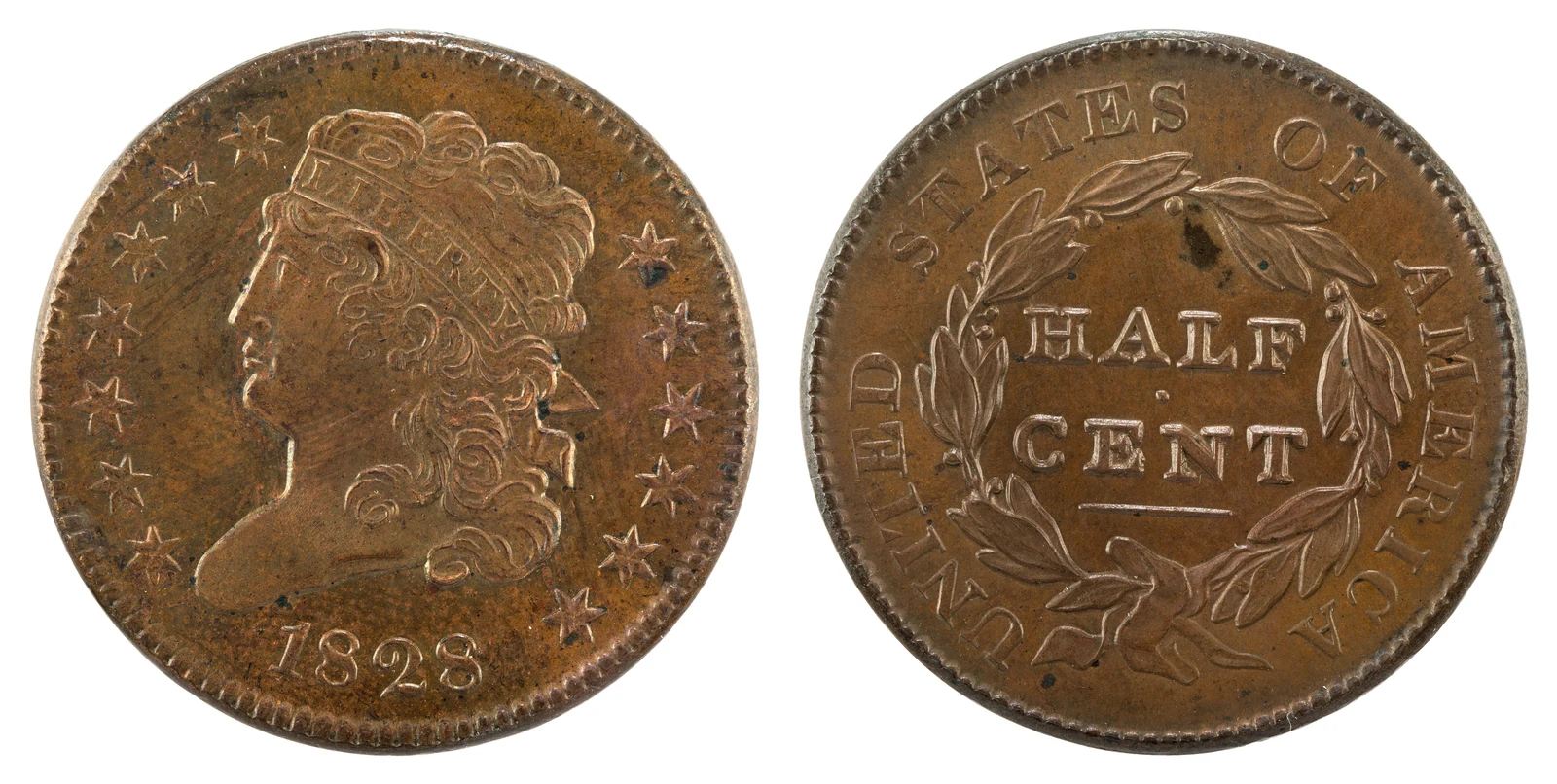
Imagine two equally reflective coins in a photograph. One was made as a proof; the other is a regular strike with mirrorlike fields. Their surfaces may share a visual quality, but their production histories are different. Sorting them together because they both look shiny creates a mistake before any price comparison begins.
PCGS explains that proofs generally involve specially prepared dies and planchets, often with more than one strike. It also points out that some historical proofs have matte surfaces. Reflectivity therefore is neither a complete definition of proof nor a requirement that covers every proof issue.
The U.S. Mint distinguishes circulating, uncirculated, and proof finishes through their production steps. For a modern product, start with its official description and exact version. For an older coin, use a reliable reference or professional attribution for that issue. The question is 'What was this coin made as?' before it is 'How impressive does it look?'
Keep production, condition, and contrast separate
A production label and a condition grade do different jobs. NGC uses PF for proof and MS for Mint State, with SP for specimen issues. PCGS commonly uses PR for proof. Copy the service's actual wording rather than replacing it with whichever abbreviation seems most familiar.
Prooflike, cameo, and other appearance terms add further distinctions. Check the issuing service's criteria and applicability before interpreting them. A casual seller's adjective is not automatically a formal designation, and one service's abbreviation should not be assumed to have identical rules everywhere.
Do not read a proof grade as a ranking above a Mint State grade simply because the word sounds more exclusive. A proof can have handling problems or wear. Likewise, an uncirculated business strike can be attractive without a prooflike designation. First establish the production category, then evaluate its condition and any additional appearance attribution within that category.
Use photographs to ask better questions
Photographs are evidence of an appearance under particular lighting, not a substitute for production records. A light source may make fields look dark, bright, or highly reflective. An image alone does not tell you how many times the coin was struck or how its planchet was prepared.
Ask for the complete label and exact issue description rather than a cropped photograph of a brilliant area. If the seller uses 'prooflike' only in the title, ask whether it is a service designation or a descriptive opinion. Keep the answer with your research notes. That distinction can determine which comparison group is relevant.
For a raw coin with uncertain attribution, avoid a home 'mirror test' as a final verdict. It might reveal reflectivity, but it does not establish the production history or authenticate the object. Specialist evidence is especially important where the difference between a proof and a regular strike materially affects the purchase decision.
- Identify the year, denomination, mint, and exact product or issue.
- Read the production prefix and every additional designation.
- Distinguish an official attribution from a seller's descriptive language.
- Record what the photographs show and what they cannot resolve.
Worked example: three descriptions, three research paths
Here is a fictional comparison without market prices. Listing A is described as PCGS PR62. Listing B is described as PCGS MS64PL. Listing C is a raw coin advertised as 'brilliant, proof-style finish.' Assume nothing about authenticity from those descriptions alone; the exercise concerns the meaning of the claims.
A belongs in research about that issue's proofs and their condition. B belongs in research about the regular-strike issue and its prooflike designation. The higher number on B does not make it a higher-grade version of A. C has not yet supplied a precise production attribution, so it belongs in a questions-needed group rather than either price sample.
Suppose all three share a date and denomination. That still does not make their sales interchangeable. Before comparing their prices, resolve the mint, composition, production category, and any special version. If C's description remains vague, do not assign it the most valuable interpretation. Uncertainty should reduce the strength of a comparison, not become a reason to imagine an undiscovered rarity.
Preserve the distinction in your own records
Use separate inventory fields for production type, service grade, additional designation, and your own appearance notes. A single field reading 'beautiful proof' makes it difficult to tell which part is an attribution and which part is personal enthusiasm. The more consequential the claim, the more valuable that separation becomes.
Keep the source that established the classification. An official modern product page, a complete service label, and a specialist's written opinion are different kinds of evidence. Record which one you have rather than treating them as interchangeable proof of everything about the coin.
When discussing a coin with another collector, lead with the precise classification you can support. You can still admire its mirrors, texture, or contrast afterward. Good terminology does not make collecting less visual; it helps ensure that the visual feature you enjoy is being compared with the right kind of coin.
COLLECTOR FAQ
Questions worth asking
Are all proofs mirrorlike?+
No. PCGS identifies matte-finish historical proofs as an important counterexample. Proof status is about production, so appearance alone is not a complete test.
Does PL on a regular-strike holder turn the coin into a proof?+
No. It adds a prooflike appearance designation under that service's standards. The coin's production category remains a separate part of the description.
Can a proof have a low grade?+
Yes. Proof is not a promise of flawless preservation. Compare the coin's condition with other proofs of the same issue instead of treating proof as the top rung of a single universal ladder.
PRIMARY SOURCES
Verify the details.
PCGS: The Difference Between Proof and Prooflike Coins ↗U.S. Mint: Coin Anatomy and Finishes ↗NGC: Grading Scale ↗KEEP LEARNING
Take the next step.
Build your coin knowledge →Compare the full auction cost →Inspect certified-coin claims →Browse all collector articles →NumisTrends provides educational information, not financial, legal, tax, grading, or appraisal advice. Verify the exact item and current market before a transaction.