
Buying decisions · 6 MIN READ
Build a Fair Coin Comparison from Sold Listings
Choose comparable objects, understand what each recorded price includes, and keep a small sample from pretending to be a market appraisal.
In this guide 5 sections + questions & sources
Define the target before searching
Write a one-line description of the coin you are researching before viewing prices. Include the issue, mint, production type, and any confirmed variety or designation. Add the grading service and grade if applicable, plus known surface problems. This prevents a striking search result from quietly changing the object you meant to compare.
Search broadly enough to learn the vocabulary, then narrow deliberately. NGC's grading scale distinguishes production types and additional designations; those distinctions should survive into your search filters. A date and denomination alone are rarely enough to establish a fair match.
Our suggested worksheet includes a 'comparison fit' column with three choices: close, contextual, or excluded. The middle category is useful when a sale teaches you something but does not belong in the arithmetic. You do not need to delete inconvenient evidence; you need to describe why it is or is not comparable.
Establish what sold and what the number means
An asking price tells you what a seller requested. A recorded sale tells you more about a transaction, but you still need to understand the record. Check the sale date, quantity, currency, buyer's premium treatment, and whether the exact accepted amount is available.
PCGS states that its Auction Prices figures include the final bid plus buyer's premium, if any, and exclude unsold lots. It also recommends checking the original catalogue and prices realized because data errors can occur. Do not add the premium again to a figure that already includes it.
On eBay, Product Research explicitly includes actual accepted Best Offer prices and differs from ordinary completed-listing results. Use the relevant tool's explanation of its data. If you cannot establish the accepted amount from the record available to you, label the price unresolved rather than treating a crossed-out or displayed asking figure as confirmed.
Normalize only what you can support
Choose a consistent comparison basis. For example, you might compare coin transaction prices including buyer's premium but excluding shipping and purchaser-specific tax. Or you might compare known delivered totals for your own buying decision. Either can be useful if the choice is explicit and every row is treated consistently.
Do not invent missing shipping or tax figures to make the table look complete. Keep them outside a transaction-price comparison when appropriate, and calculate your own expected purchase total separately. A sold price from another buyer's destination is not automatically your delivered cost.
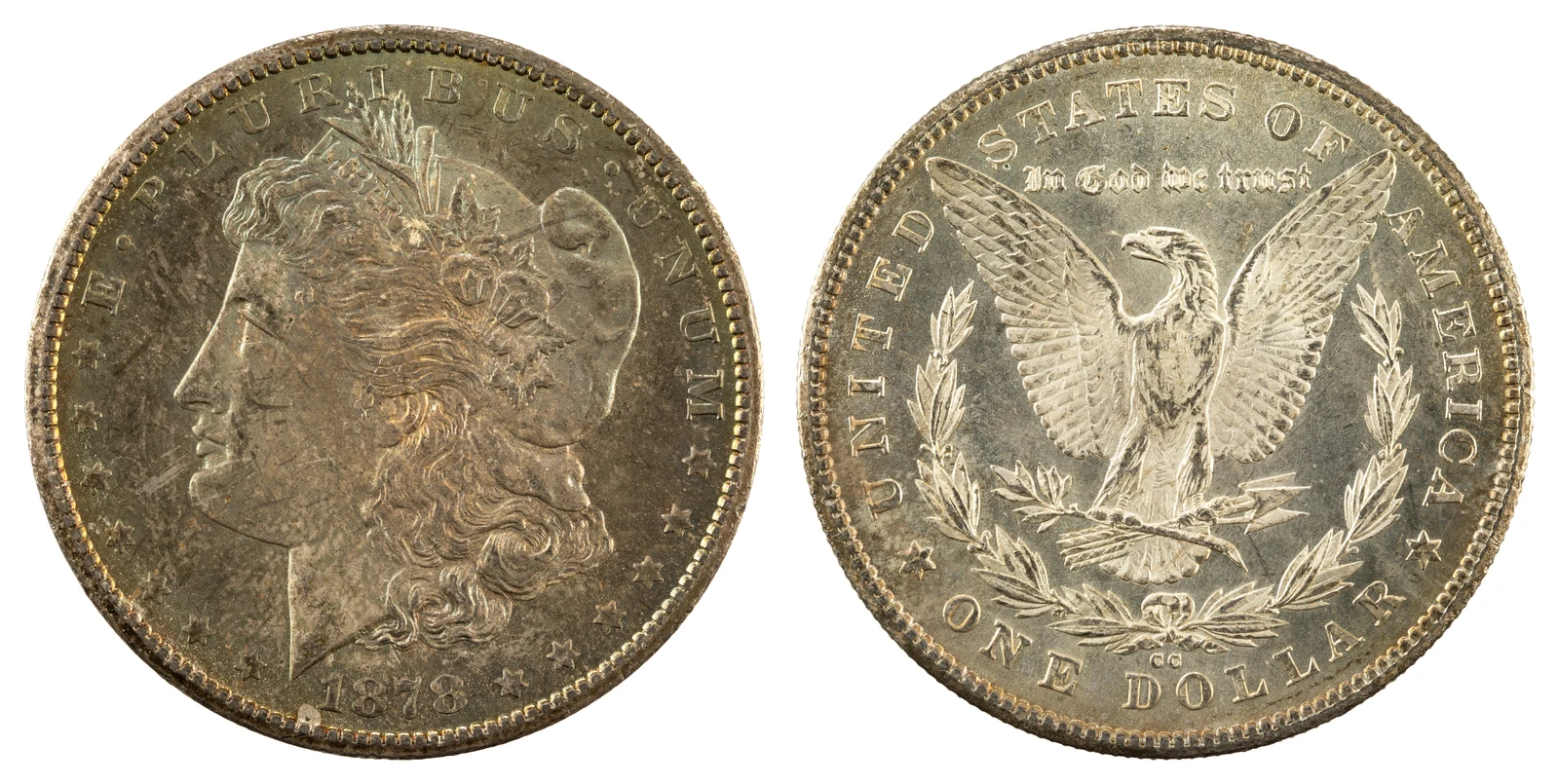
Also look at the actual coin photographs. The same service grade does not make every visual feature identical. Record obvious distinctions such as an added designation, a disclosed problem, unusual toning, or a different presentation. Avoid arbitrary adjustments such as adding ten percent for a color you like; the evidence may not support a numerical correction.
- Price basis and whether buyer's premium is already included.
- Single coin versus group, set, or mixed lot.
- Sale date, venue, currency, and exact lot or listing reference.
- Condition wording, designation, and photographs actually reviewed.
- Missing information and the reason a record was excluded.
Worked example: six results become three comparisons
Here is an entirely fictional search exercise. You find six records for what initially looks like one coin: a $400 active listing; a $210 sold proof; a $95 sold Details example; and three sold regular-strike coins at $170, $185, and $200. Your target is a numerically graded regular strike matching the last three records.
The $400 request is not a completed transaction. The proof is a different production category. The Details example has a different condition basis. Keep those three as excluded or contextual records, not as ingredients in an average. Assume for this exercise that the remaining three match the target closely and use the same price basis.
The usable observations span $170 to $200, with a median of $185. That does not establish that your coin is worth exactly $185. It says that three fictional comparable observations fall in that interval. If one is from years earlier or has materially different appearance, the confidence should weaken further. Filtering explains the result more honestly than presenting a six-record average.
Report the limits along with the range
Save the search terms, checked date, inclusion rules, and links with your notes. Another person should be able to understand why a sale made the comparison group. If you change a rule halfway through, rerun the group consistently rather than applying the new rule only to prices you dislike.
Watch for repeated appearances of the same coin. Where holder identifiers or photographs establish that two records concern one object, note the relationship. Those transactions may still be useful history, but they are not evidence of two different specimens finding separate buyers at the same moment.
Close with a plain-language conclusion: how many close comparisons you found, their date range, the price basis, and the biggest remaining uncertainty. For a consequential purchase or formal valuation purpose, seek appropriate professional help. A disciplined comparison is a research tool, not an appraisal certificate or a promise that you can resell at the same price.
COLLECTOR FAQ
Questions worth asking
Should I use the highest sale as my coin's value?+
Not automatically. Examine why that particular coin brought that result and whether it matches yours. A record price may be useful context without being the best comparison.
Is the average better than the median?+
Neither repairs a poorly matched sample. Select comparable records first, then explain the measure used. With only a few sales, showing the range and individual differences is often more informative.
Can I use a sold listing if the accepted offer is hidden?+
Keep the record, but do not claim an exact sale price you cannot verify. eBay's Product Research may provide the actual accepted amount when accessible; otherwise mark that field unresolved.
PRIMARY SOURCES
Verify the details.
PCGS: Auction Prices Realized and Data Caveats ↗eBay: Product Research and Actual Sold Prices ↗NGC: Grading Scale ↗KEEP LEARNING
Take the next step.
Build your coin knowledge →Compare the full auction cost →Inspect certified-coin claims →Browse all collector articles →NumisTrends provides educational information, not financial, legal, tax, grading, or appraisal advice. Verify the exact item and current market before a transaction.