
Collector practice · 6 MIN READ
Boxes and Certificates: Useful Coin Evidence, Not Proof of Everything
Check completeness and product identity without turning a mint box, COA, or sealed carton into an unsupported grading claim.
In this guide 5 sections + questions & sources
Ask what the document actually certifies
A certificate can look reassuring because it is formal, printed, and accompanied by an attractive case. Read its actual statement before deciding what it establishes. Which mint or issuer produced it? What product does it describe? Does it identify one object, a set, or a general issue? Does any number connect to a specific coin, or only to the paperwork?
The U.S. Mint explains that not every product includes a separate certificate of authenticity; some certification language appears in packaging. Its FAQ also describes requesting a replacement when one is available. Absence of a loose certificate therefore needs product-specific context rather than an automatic conclusion about the coin.
Keep the document's role narrow. Specifications printed on a certificate can help you research the intended product. They are not a substitute for checking the actual object's identity, and they are not a numerical condition assessment from an independent grading service.
Check the bundle, component by component
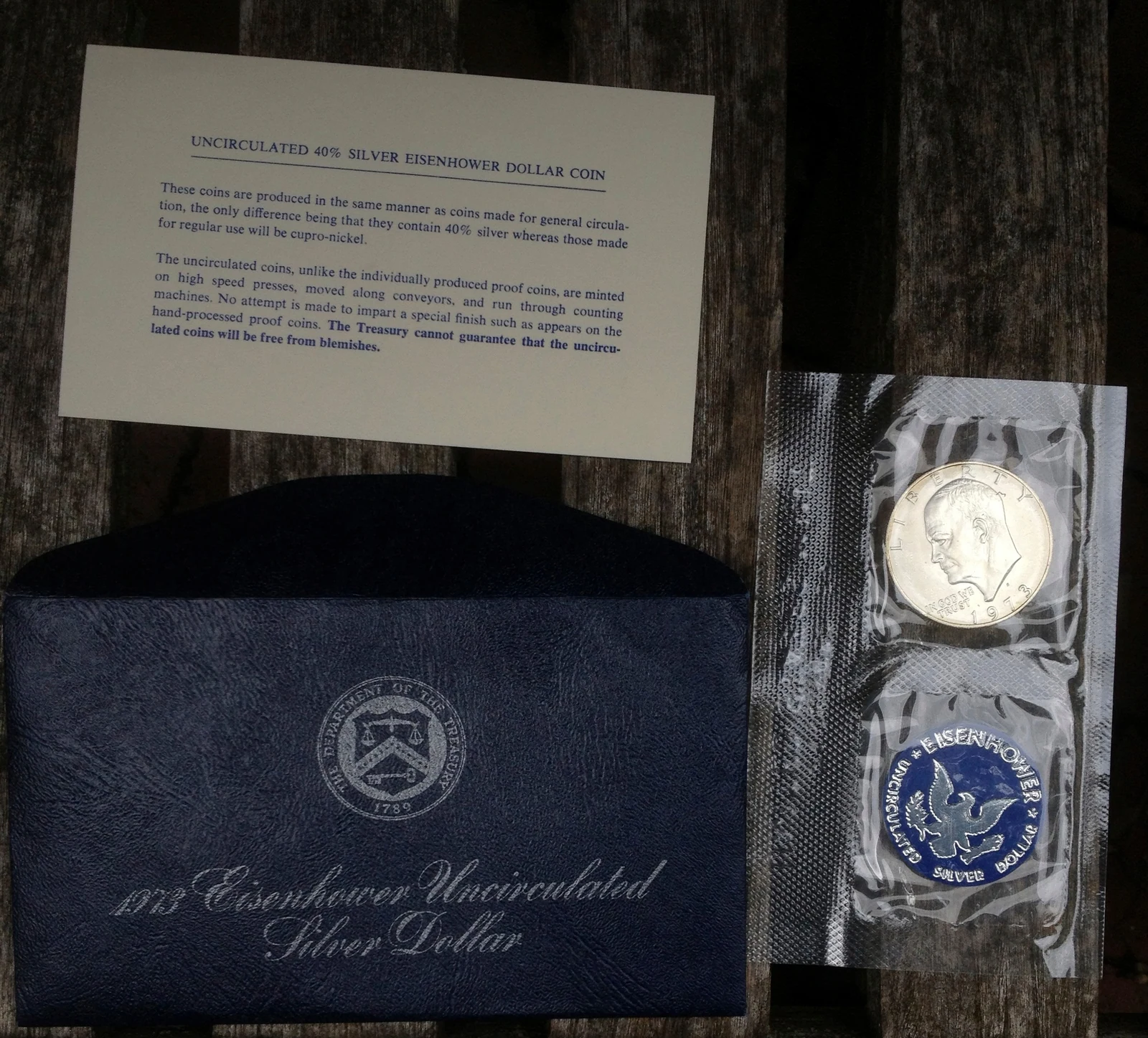
Build a contents list before assessing whether a set is complete. Name each coin or medal, capsule, case, outer sleeve, booklet, and certificate that the particular issue originally included. Use the official product description where available, not a generic photograph of similar packaging from another year.
Record what is present and what is only pictured in an advertisement. A listing may show a complete manufacturer's presentation as a reference while offering a different bundle. Ask for an explicit contents statement and photographs of the actual pieces when completeness matters to your decision.
Describe packaging condition separately from coin condition. A split box corner, a missing sleeve, and a scratched capsule are different observations. They should not be compressed into 'poor coin' or concealed by 'mint condition.' Your objective is a clear record of the bundle, including any mismatch you have not yet resolved.
- Exact issuing product, year, finish, and product identifier if available.
- Number and identity of coins or medals actually included.
- Which capsules, cases, sleeves, booklets, and certificates are present.
- Observed packaging damage and any unexplained mismatched wording.
- Seller confirmation of whether photographs show the actual offered bundle.
Do not confuse sealed packaging with a grade
A sealed carton can preserve evidence about how a product was received, but 'unopened' is not the same statement as 'independently graded.' You may have less direct information about the condition of objects you cannot see. That is an information tradeoff, not automatic evidence of perfection.
Some NGC set attributions require original packaging or an intact shipping box. Requirements vary by set. If that attribution matters, check the exact current instructions before opening or rearranging the package.
Do not generalize those requirements to every product. A sealed box required for one attribution does not establish universal eligibility for another designation. Nor does a seller's 'grading candidate' description guarantee a particular result. Decide whether you are buying a documented set, a sealed package with unresolved contents, or an already evaluated coin.
Worked example: an incomplete presentation
Consider a fictional modern three-piece set. The official description lists three coins, three capsules, a presentation case, an outer sleeve, and one certificate. The seller's photographs show three coins in the correct-looking case but only two capsules; the certificate heading appears to name a different year. No conclusion about authenticity follows from this exercise.
The buyer's first response is a precise question: 'Please confirm whether all three original capsules are included and photograph the certificate heading with the actual set.' That is more useful than asking whether everything is 'genuine and complete,' which can produce a broad assurance without resolving the mismatch.
If the seller confirms that one capsule is missing and the certificate belongs to another issue, the record should say exactly that. The buyer can then evaluate the offered bundle on its actual terms or decline it. Buying a replacement accessory later may restore a preferred presentation, but it does not retrospectively prove that every component remained together since issue.
Preserve evidence without inventing a pedigree
Photograph labels, product codes, and included documents while their association with the set is clear. Keep a record of any later replacement: what was added, where it came from, and why. This small note prevents a future owner from mistaking a reconstructed presentation for an uninterrupted original bundle.
Do not discard potentially relevant packaging simply because coins have entered grading holders. Equally, do not assume every box or certificate adds a fixed premium. Research comparable bundles if packaging is part of the purchase rationale. A complete case can be important to one collector and irrelevant to another collecting purpose.
When passing the set on, separate factual statements from preferences. 'Includes the case and certificate shown; sleeve missing' is useful. 'Investment grade because it has a COA' is not an inference the paperwork supports. Accurate completeness language helps the next collector make the same informed choice you wanted to make.
COLLECTOR FAQ
Questions worth asking
Does a U.S. Mint COA mean the coin has been graded 70?+
No. A mint certificate and a third-party numerical grade serve different purposes. Do not assign a numerical grade from packaging or a certificate.
Is a missing COA evidence that a coin is fake?+
Not by itself. Establish whether that exact product originally included one and assess the actual coin using appropriate evidence. A missing accessory and a false identity are different issues.
Should I open a sealed set before submitting it for grading?+
Check the requirements for the exact attribution or designation you want first. Some set attributions depend on intact packaging. Do not assume another set's submission instructions apply.
PRIMARY SOURCES
Verify the details.
U.S. Mint: Products and Coin Programs FAQs ↗U.S. Mint: Collectible Coin Programs ↗NGC: Pedigrees and Attribution Requirements ↗NGC: Grading Scale ↗KEEP LEARNING
Take the next step.
Build your coin knowledge →Compare the full auction cost →Inspect certified-coin claims →Browse all collector articles →NumisTrends provides educational information, not financial, legal, tax, grading, or appraisal advice. Verify the exact item and current market before a transaction.