
COLLECTING · CONDITION
Coin Grading Guide: Understanding the 1–70 Scale
Learn the 1–70 grading scale, the difference between circulated and Mint State coins, what certification means, and why eye appeal matters.
In this guide 4 sections + questions & sources
The Sheldon scale runs from 1 to 70. Circulated coins show wear; Mint State coins grade 60–70 and show no wear from circulation. Services evaluate authenticity, surface preservation, strike, luster, and eye appeal before assigning a grade.
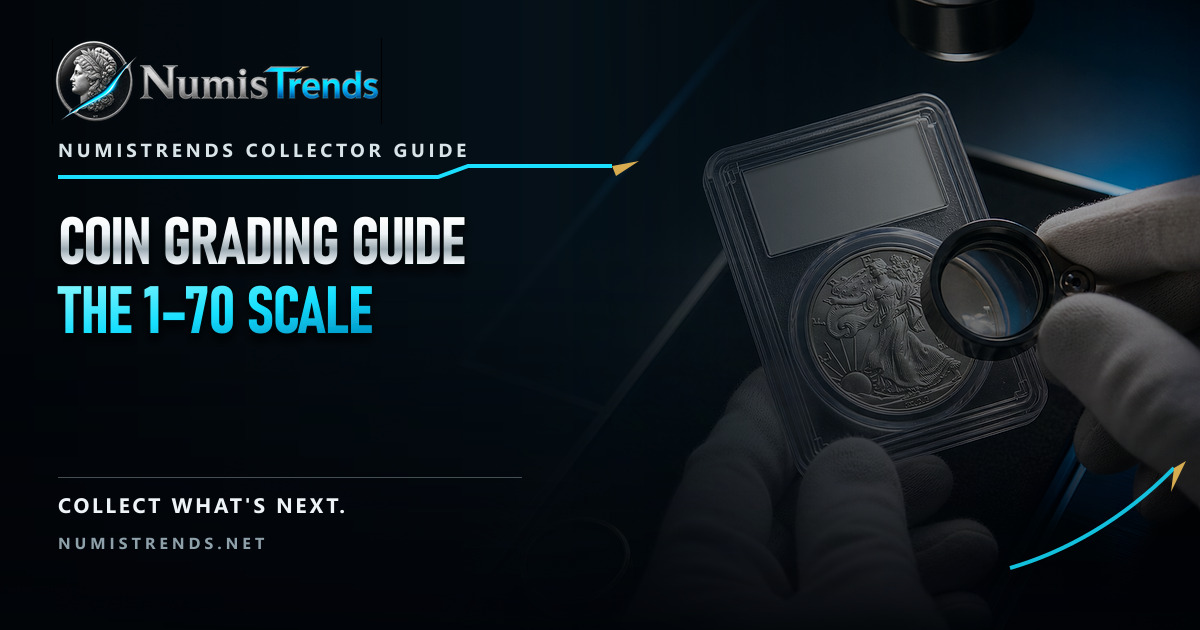
Read the scale in groups
Do not try to memorize seventy separate grades. Start with major condition groups, then learn the distinctions inside the series you collect.
- Poor to About Good: 1–3
- Good to Very Good: 4–10
- Fine to Very Fine: 12–35
- Extremely Fine to About Uncirculated: 40–58
- Mint State: 60–70
- Proof grades use the same numeric range with proof designations
What graders evaluate
The weight of each factor changes by coin type. A softly struck issue should not be judged like a sharply struck one, and luster breaks are different from strike weakness.
- Authenticity
- Wear
- Surface marks and preservation
- Luster
- Strike
- Color and eye appeal
Put that idea to work.
What should you do after seeing a PCGS or NGC certification number?
No score, no penalty. Use the explanation and try again.
What coin certification means
A reputable grading-service holder records an expert opinion of authenticity and grade, protects the coin, and makes comparison easier. Inspect the coin and current market before buying.
Verify the certification number on the grading service website and compare the label details with the coin in hand.
Cleaning and problem coins
Harsh cleaning, polishing, scratches, environmental damage, and repairs can lead to a details designation instead of a straight numeric grade. Never attempt to improve a coin before an evaluation; irreversible surface changes can destroy collector value.
FREQUENTLY ASKED
Questions collectors ask next
What does BU mean?+
Brilliant Uncirculated is a market term for an uncirculated coin with original mint luster. It is not one exact numeric grade.
What is the difference between MS and PF or PR?+
MS identifies Mint State business strikes. PF and PR identify proof coins made with a specialized minting process; grading services use different abbreviations.
Does a higher grade always mean a more valuable coin?+
Within the same issue and variety, usually—but rarity, demand, color, strike, holder, and market timing also matter. A lower-grade key date can be worth far more than a perfect common coin.
This guide is educational and does not provide financial, tax, legal, or individualized appraisal advice. Markets move; verify current prices and the exact coin before transacting.
 U.S. COINS · VALUE
 BULLION · MODERN U.S.
 SELLING · CHECKLIST