
Gemstones · 5 MIN READ
Pleochroism or Color Change? Change One Thing at a Time
Separate changes caused by viewing direction from those associated with a different light source, without treating a phone video as identification.
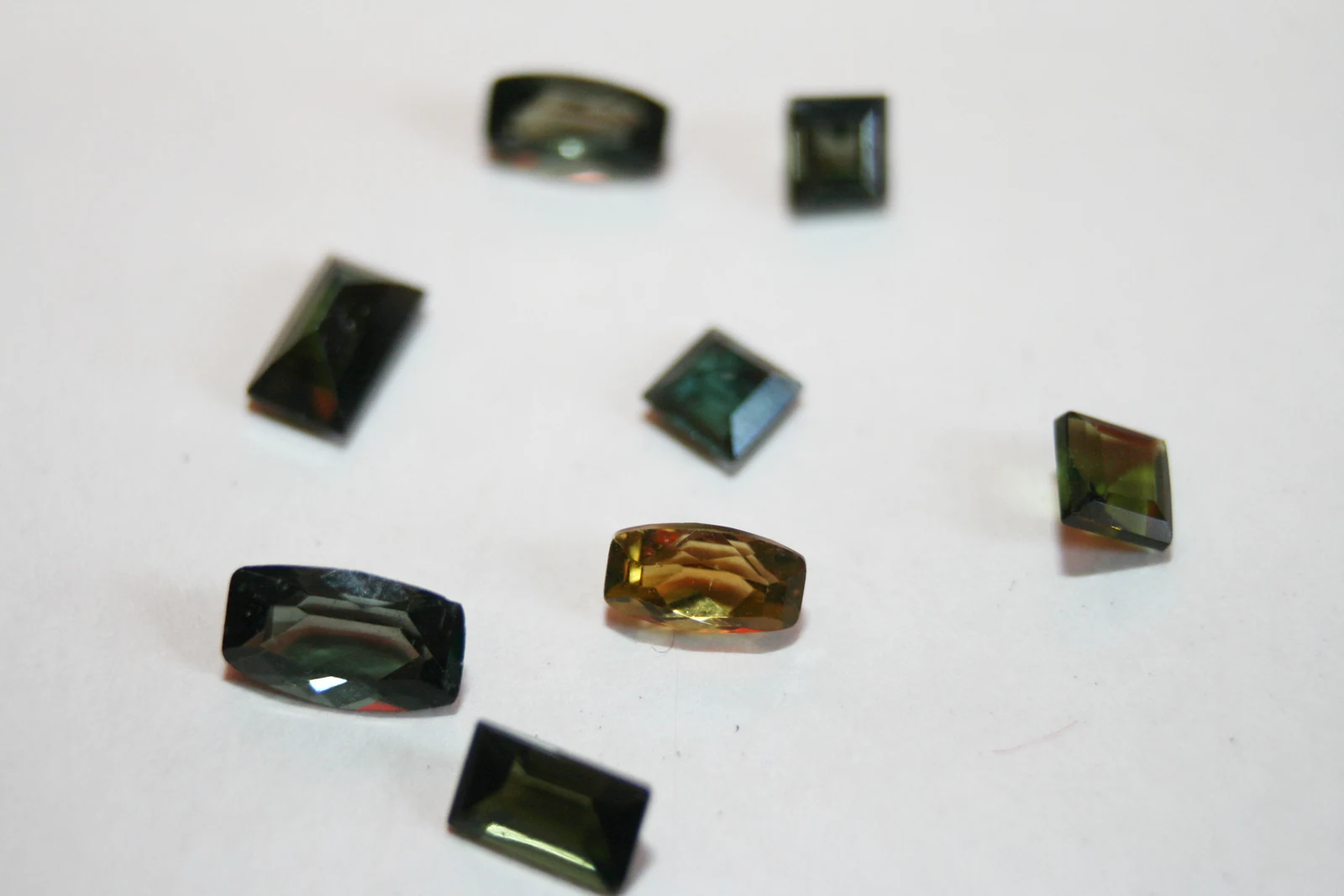
In this guide 6 sections + questions & sources
Ask what changed between the two observations
A stone appears blue in one moment and violet in the next. Before naming the effect, ask what moved. Was the stone rotated? Did the light source change? Did the camera automatically adjust? Did the background shift from pale to dark? Several changes can occur during a short jewelry video, making a confident label harder to justify than it first seems.
A useful observation describes the conditions before it interprets them. 'More violet when viewed through the end under the same lamp' is more informative than 'changes color.' So is 'redder under this warm lamp than near the window, with the same face-up orientation.' Neither sentence identifies a species. Both preserve enough information for a later conversation with a gemologist.
Pleochroism is about direction and absorption
Pleochroism is directional color variation associated with different absorption of light in certain doubly refractive crystals. It is not simply the sparkle that moves across any faceted object. A gemologist may use a dichroscope or other controlled optical observations to investigate it, but a consumer can still learn to describe directional differences without assigning an identity.
GIA's introduction emphasizes that faceted gems make the subject more complicated than a simple view through an uncut crystal. Internal reflections and the way facets direct light affect the colors seen together. Tanzanite is a familiar practical example: its orientation and cutting influence the mix of blue and violet seen face-up. A momentary purple flash should not be isolated from that broader appearance.
Color change asks about different illumination
In the gemological color-change question, the light source is the variable of interest. Alexandrite is well known for a change between daylight-type and incandescent illumination, but a similar kind of effect occurs in other gem materials too. Seeing a greenish and reddish appearance does not, on its own, prove that a stone is alexandrite or that it formed naturally.
A GIA study of faceted synthetic alexandrite examined both directional color and changes between illuminants. Its use of laboratory-grown samples is an important reminder: an attractive optical effect is not a certificate of natural growth. The study also showed that color mixing within faceted stones complicates simple orientation rules. Record the effect you can observe; reserve species and origin conclusions for suitable examination.
Use a fictional two-part observation session
Imagine a fictional blue-violet gem resting securely on a neutral surface. In the first part, keep the lamp, background and viewing location unchanged while gently changing the stone's orientation. Note whether the overall body color shifts with direction, whether only individual facets flash, or whether a darker area stays in the same place. These observations are descriptive, not a diagnostic test.
In the second part, return the stone to one marked orientation and compare it under two identified everyday light sources. Avoid mixing the lights. Keep your viewing position stable. A video can help preserve the comparison, but keep exposure and white balance as consistent as your equipment permits and disclose any adjustments. Do not use strong UV, heat or prolonged intense light to force a dramatic result.
- Session A: same illumination, different viewing directions.
- Session B: same orientation, different identified illuminants.
- Record visible body-color differences separately from sparkle or dark reflections.
- Keep original images and note camera or editing changes.
- Treat the outcome as an observation log, not an authentication result.
Not every apparent change has the same cause
Color zoning describes different colored regions within a stone. Reflections, dispersion and uneven illumination can also affect what a viewer sees. A moving bright flash does not by itself establish pleochroism, and a change in a photograph does not automatically establish a repeatable illuminant-dependent color change. When several variables move together, pause the classification.
There are also less common effects outside this basic comparison. GIA documented a sapphire whose color changed after a particular laboratory light exposure and later recovered, an example discussed as photochromism. That specific case is not a home-testing recipe or evidence that ordinary blue sapphires behave the same way. Its lesson is that an unexpected response may need specialist investigation rather than the nearest familiar trade term.
Ask for a fair presentation, not the strongest frame
If you are evaluating a listing, request an ordinary face-up view in each stated light, not only a sequence that continuously rotates the gem through highlights. Ask which source produced each appearance and whether the same settings were used. A dramatic pair of edited stills can demonstrate two images without demonstrating how the stone looks in routine use.
Decide what matters to you aesthetically after the observation is clarified. A subtle directional mix may be appealing even without a strong color-change claim. If the advertised species or natural origin is important, seek independent evidence addressing those facts. Good presentation and clear terminology make the conversation more honest; neither replaces laboratory identification.
COLLECTOR FAQ
Questions worth asking
Can one gem show both effects?+
Yes. Pleochroism and illuminant-dependent color change can occur together. Faceting mixes light paths, so separate observations are more informative than one rotating, relit video.
Does a red flash in tanzanite mean it is alexandrite?+
No. A flash or directional color difference is not a species identification. Tanzanite can display a mix of pleochroic colors, and other optical effects may contribute to its appearance.
Can a phone accurately document a color-change gem?+
It can record a useful comparison, but camera processing, exposure, white balance and the display affect the result. State the conditions and edits, and compare the stone directly when possible.
PRIMARY SOURCES
Verify the details.
GIA: Pleochroism in Faceted Gems—An Introduction (2014) ↗GIA: Pleochroism and Color Change in Faceted Alexandrite (2019) ↗GIA: Tanzanite Quality Factors ↗GIA: Unusual Optical Effect in Blue Sapphire (2014) ↗KEEP LEARNING
Take the next step.
Explore the gemstone reference →Understand treatments and laboratory reports →Browse all collector articles →NumisTrends provides educational information, not financial, legal, tax, grading, or appraisal advice. Verify the exact item and current market before a transaction.