
Gemstones · 5 MIN READ
Pearl Terms That Answer Different Questions
Natural, cultured, freshwater, saltwater and bead-nucleated are not competing names for the same distinction.
In this guide 6 sections + questions & sources
Begin with how growth was initiated
Natural and cultured describe a central difference in pearl formation. GIA explains that natural pearls form without human assistance, while pearl culturing involves human intervention in initiating growth and caring for the mollusks. Both involve biological activity. This distinction is not equivalent to the difference between a pearl and an object manufactured merely to resemble one.
When recording a strand, use the stated category precisely. “Pearls” is broader than “cultured pearls,” and “natural pearls” is a substantive claim rather than a synonym for attractive or genuine. If a listing uses genuine without explaining the formation category, ask for clarification. Do not upgrade cultured pearls to natural pearls in a resale description simply because they were formed by mollusks or because the original owner considered them authentic jewelry.
Water environment is an independent field
Freshwater and saltwater identify formation environments, not a substitute for the natural-versus-cultured distinction. GIA’s pearl encyclopedia explicitly recognizes natural or cultured pearls from freshwater or saltwater settings. The labels should therefore be combined when supported, rather than placed in an either-or list that treats freshwater as an alternative to cultured.
For a beginner’s worksheet, create one field for growth category and another for environment. Leave either unresolved if the documentation does not answer it. A seller’s location is not evidence of the water where a pearl formed. Similarly, do not infer the environment solely from the color of a photograph. A neatly completed two-column record is more useful than a single broad label repeated across every pearl in an inherited jewelry box.
A bead nucleus is another question again
Culturing can involve a bead and implanted tissue or tissue without a bead. GIA’s current discussion of pearl types notes that bead-nucleated freshwater cultured pearls have become more common, alongside tissue-nucleated production. The shortcut “freshwater means no bead” therefore does not hold. Nor should the presence of a bead be confused with an imitation pearl.
If internal construction matters to your purchase or research, ask whether that conclusion is documented and how it was established. Do not drill, enlarge a hole or pull a pearl from jewelry to look inside. A necklace photograph normally cannot supply a dependable account of its interior. Keep external observations such as shape and visible surface condition separate from any statement about the nucleus or the manner in which growth was initiated.
Appearance terms are not origin categories
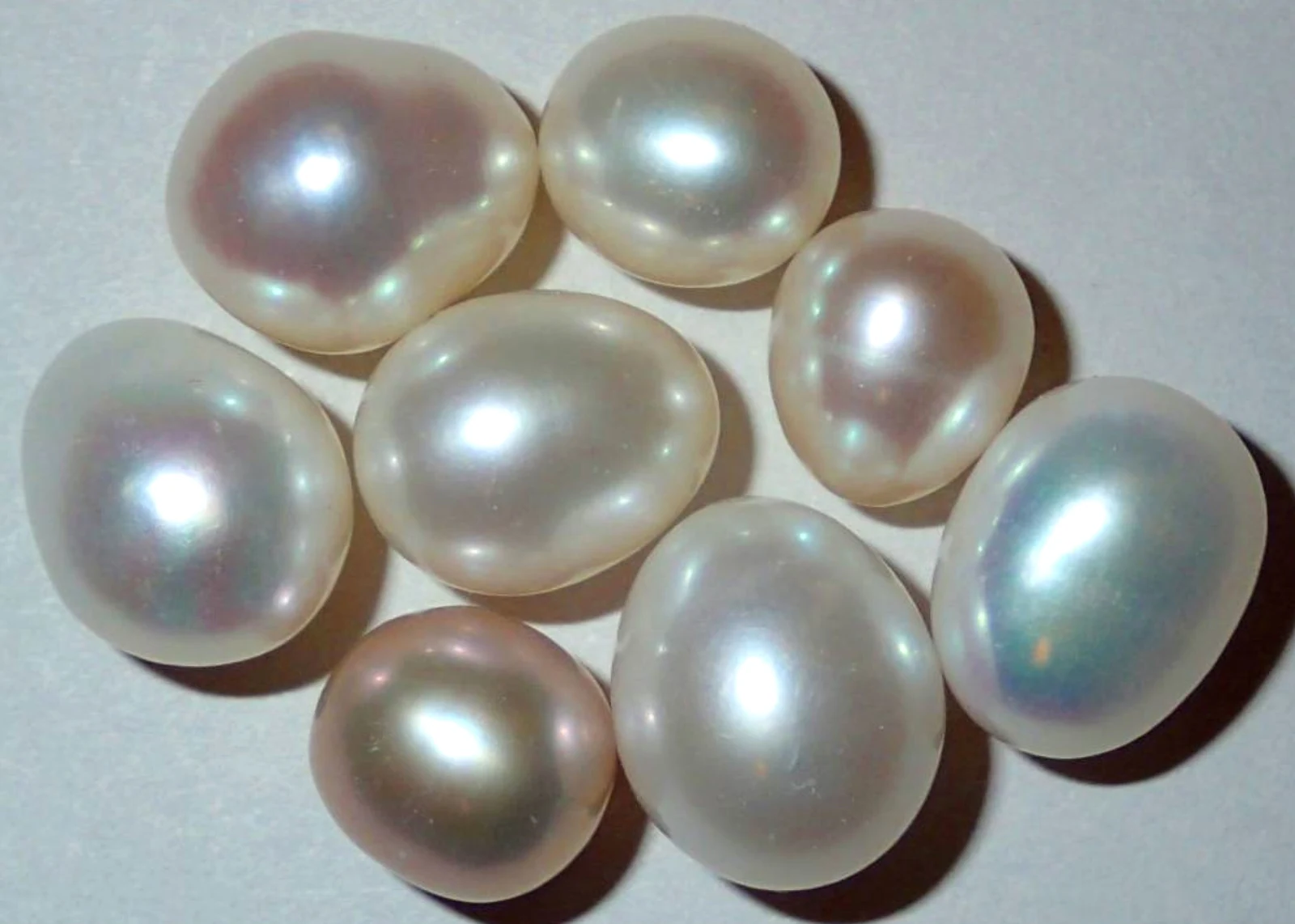
GIA distinguishes a pearl’s dominant bodycolor from overtones and the iridescent effect called orient. Its quality framework also considers features such as size, shape, luster, surface, nacre and matching. These terms describe different aspects of appearance and quality; none should be used alone as a declaration that a pearl is natural rather than cultured.
Make a comparison under consistent lighting, then write short observational notes. For example, record a cream overall appearance with a pinkish surface impression in that setup rather than inventing a laboratory color designation. For earrings or a strand, inspect how the pieces work together as well as individually. A deliberately varied design need not aim for identical pearls, so state whether you are assessing uniformity or appreciating an intentional mixture.
A fictional strand description, untangled
A fictional listing reads “natural-color freshwater cultured pearls, baroque shapes.” Natural-color concerns the color claim; freshwater concerns environment; cultured concerns growth initiation; and baroque describes shape. Removing the hyphen and reading the phrase as “natural pearls” would materially change its meaning. Ask the seller to resolve ambiguous wording rather than choosing the interpretation that sounds more valuable.
In your worksheet, preserve each part of the description and identify its evidence. If the listing supplies no report, record that limitation without pretending the description has been independently confirmed. Request overall views, individual close-ups and relevant condition information before deciding whether further examination is necessary. These steps improve the purchasing conversation; they do not turn a buyer’s photos or notes into a pearl identification report.
- Keep natural-color separate from natural pearl.
- Do not infer bead structure from freshwater terminology.
- Record the source of each claim, not just the claim itself.
Know when a general word is too general
The pearl category also includes nacreous and non-nacreous examples, a distinction recognized by GIA’s encyclopedia. An introductory article cannot safely reduce every pearl to the same surface structure, host mollusk or growth process. If a description uses a less familiar pearl term, ask for the specific identification rather than forcing it into the most common cultured-necklace model.
A useful record can remain incomplete: “Cultured pearl strand according to invoice; environment stated as freshwater; internal structure not documented.” That is clear enough for a later specialist to understand what still needs examination. This article explains vocabulary, not the identity of a particular pearl or the value of a strand. It does not supply a home test for natural pearls, certify color origin or endorse any seller’s grading system.
COLLECTOR FAQ
Questions worth asking
Are cultured pearls imitation pearls?+
No. Cultured pearls form through a biological process initiated with human intervention. That is distinct from manufacturing an object to imitate a pearl’s appearance.
Are all freshwater cultured pearls bead-free?+
No. Both tissue-nucleated and bead-nucleated freshwater cultured pearls are described in GIA’s current material. Ask about the particular pearls rather than applying a universal shortcut.
Does natural-color mean natural pearl?+
No. Natural-color refers to a color claim; natural pearl refers to how pearl formation began. A cultured pearl can be described as natural-color, and the two claims should remain separate.
PRIMARY SOURCES
Verify the details.
GIA: Pearl Description ↗www.gia.edu ↗GIA: Differences Between Pearl Types ↗GIA: Pearl Quality Factors ↗KEEP LEARNING
Take the next step.
Explore the gemstone reference →Understand treatments and laboratory reports →Browse all collector articles →NumisTrends provides educational information, not financial, legal, tax, grading, or appraisal advice. Verify the exact item and current market before a transaction.