
Gemstones · 6 MIN READ
Opal Bodycolor and Play-of-Color Are Different Things
Describe an opal’s background, flashes and viewing behavior without letting one spectacular photo answer everything.
In this guide 6 sections + questions & sources
Separate the background from the flashes
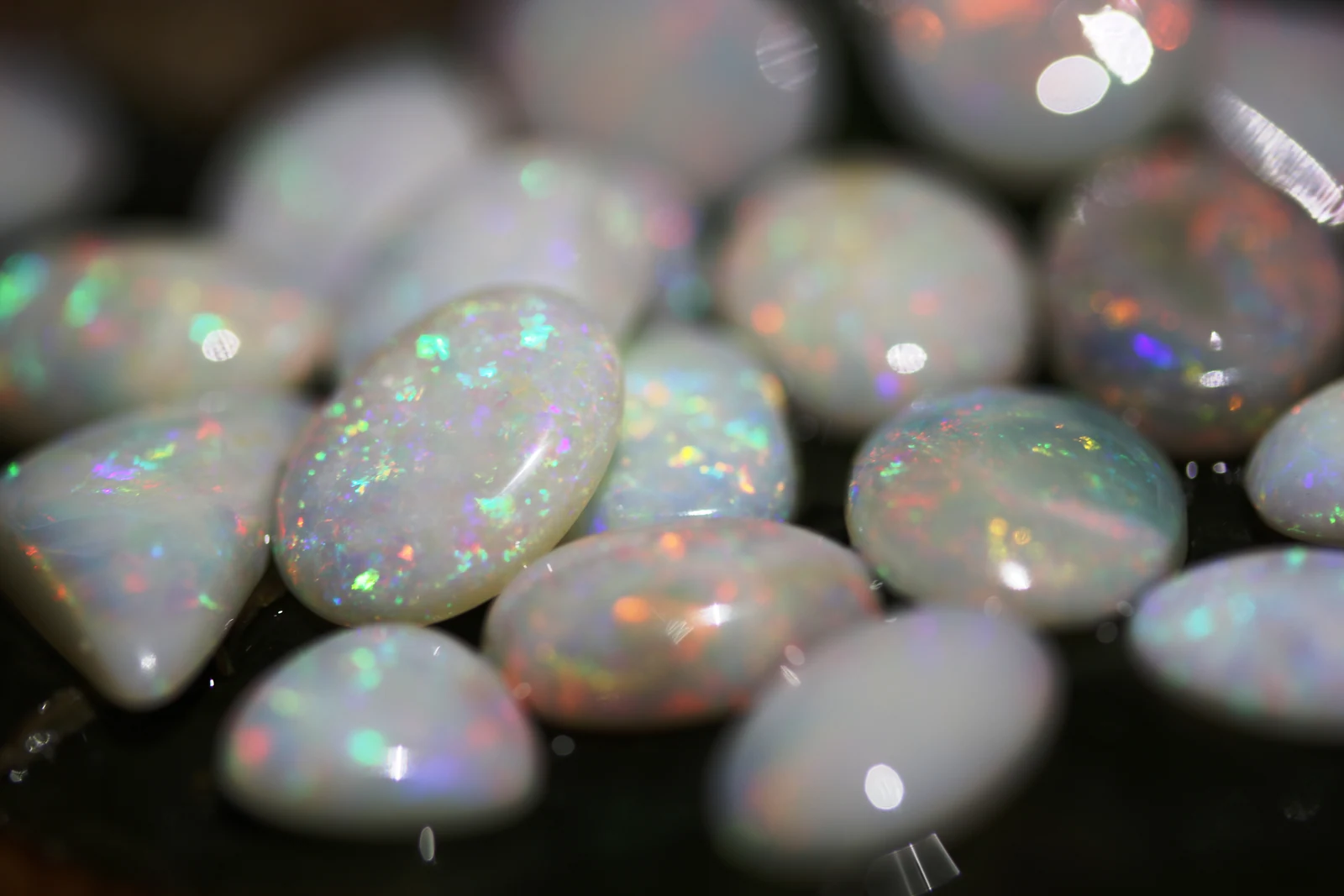
An opal can show a pale or dark background while also displaying bright patches of other colors. GIA distinguishes that background, called bodycolor, from play-of-color. Treat the two as separate observations. Otherwise, a description such as “red opal” can leave you uncertain whether red describes the body, a moving flash or simply the dominant color in one photograph.
Begin with plain language: light background, green and orange flashes visible at certain angles, for example. Record the viewing conditions beside the description. You do not need to assign a specialized trade category before you can describe what you see. In fact, delaying the label can help you notice whether a term in the listing is explaining the stone’s appearance or merely making it sound more dramatic.
Fire opal does not promise rainbow flashes
GIA describes fire opal as transparent to translucent material with warm bodycolors that can include yellow, orange and red; it can lack play-of-color. Precious opal displays play-of-color, while common opal does not. These terms address partly different features, so a warm-colored opal need not display the rainbow effect a beginner might expect from the word fire.
If you are buying primarily for moving color, ask for that characteristic explicitly. Do not rely on a title containing fire, crystal or black without understanding the seller’s usage. A clear question is: “Does this particular piece show play-of-color, and can I see it in a continuous video?” That request focuses on the feature you care about without assuming that a familiar name already guarantees it.
The optical explanation has a practical consequence
GIA explains precious opal’s play-of-color in terms of light diffraction associated with its microscopic silica-sphere arrangement. For a viewer, the important consequence is that the display depends on how the stone and light are positioned. An intense patch visible at one moment need not remain equally visible throughout a turn.
Ask to see slow movement through ordinary viewing positions, including moments when the strongest patch disappears. That is not an attempt to make the stone look worse; it reveals its viewing behavior. If a video repeatedly returns to one narrow angle, request a complete pass with the light arrangement described. You can then decide whether the display suits your preferences without pretending that the recording establishes material identity or the absence of treatment.
Pattern names should clarify the view
GIA uses pattern terminology to describe the arrangement of play-of-color, including small spots and broader patches. Such vocabulary can be helpful, but it should not replace an image that actually shows the arrangement. Begin by noting the approximate coverage, locations and colors you can observe, then compare the seller’s pattern term with that evidence.
Do not assume that a name in an advertisement is a laboratory-certified quality grade. Two people may use a descriptive term differently, and a close crop can conceal how a pattern occupies the whole stone. Request an overall view before making judgments from a magnified detail. Also distinguish a visual preference from a market conclusion: liking large patches does not equip you to assign a price or declare every other pattern inferior.
A fictional three-image comparison
Imagine three photographs of the same fictional opal: one on white card, one on black card, and one tightly cropped around a red flash. The pictures might all be honestly captured yet convey very different impressions. A buyer should not average the colors or assume the most saturated image is the definitive view. The missing information is how the opal behaves under a repeatable setup.
Request a neutral overall view and a short continuous rotation with the camera settings and lighting kept consistent. Then record separately: background appearance, visible play-of-color, positions where the display is strongest, and areas that remain difficult to judge. If the seller changes lighting between clips, keep the observations in separate rows. This makes a comparison intelligible without pretending that a phone display reproduces the in-person experience exactly.
- Describe bodycolor and play-of-color separately.
- Ask for an overall view plus slow movement, not only a hero angle.
- Keep lighting changes and image adjustments disclosed alongside the media.
Leave construction and identity questions open
A beautiful display does not answer every question about an opal object. Ask separately what material and construction are being represented, and what evidence supports that description. Do not use moving colors as proof of natural origin. Likewise, do not infer the thickness of a color-bearing portion or the condition of hidden surfaces from a face-up photograph.
Your final note might say: “Warm orange background; green flashes visible during rotation; construction stated by seller but not independently examined.” That is a useful observation record with honest boundaries. This article is about optical vocabulary and viewing, not identifying a specimen, ranking opal quality or caring for doublets and triplets. If one of those other questions matters to the purchase, it deserves its own documentation rather than an answer borrowed from appearance.
COLLECTOR FAQ
Questions worth asking
Must fire opal show play-of-color?+
No. Fire opal is associated with warm bodycolor and can occur without play-of-color. Ask about the optical effect separately if it is essential to your choice.
Does the brightest photograph show the whole story?+
No. It records one combination of angle, lighting and camera behavior. A slow, continuous view under stated conditions is more informative about how the display changes.
Does play-of-color prove natural opal?+
No. Observing an effect is not a complete material identification or growth-origin determination. Keep the seller’s identity and construction claims separate from your visual observations.
KEEP LEARNING
Take the next step.
Explore the gemstone reference →Understand treatments and laboratory reports →Browse all collector articles →NumisTrends provides educational information, not financial, legal, tax, grading, or appraisal advice. Verify the exact item and current market before a transaction.