
Gemstones · 5 MIN READ
Gemstone Carat Weight Versus Dimensions: What Will Actually Look Bigger?
Compare millimeters, depth and stated weight without confusing a heavier stone with a larger face-up appearance.
In this guide 6 sections + questions & sources
Read carats as mass, not a diameter
One metric carat equals 0.2 grams. A carat is divided into 100 points, so a fifty-point stone weighs half a carat. Neither description states its diameter. Carat also differs from karat, the term used for gold purity. Keeping those words separate prevents a jewelry description from sounding more informative than it is.
A gemstone's measurements answer different questions. Length and width describe its outline; depth describes how far it extends from top to bottom. For an oval, an 8 × 6 millimeter outline is not shorthand for a particular weight. Nor does a two-carat label guarantee twice the visible area of a one-carat stone. Start a comparison with both sets of information.
Density changes the amount of material per carat
Materials with different densities need different volumes to reach the same mass. GIA's discussion of carat weight explains why gems of different materials can differ in size at an equal weight. The comparison is only useful when shape and proportions are considered too. A density fact does not cancel the effects of a very deep or very shallow cut.
An imaginary classroom comparison makes the point without pretending to supply a gemstone size chart. If two objects have the same volume but one material is denser, that object weighs more. If their masses are equal instead, the denser material occupies less volume. Volume is still not the same as face-up spread: some of that volume may be below the visible outline. Avoid converting one comparison into another without stating the assumptions.
Inspect where the weight is carried
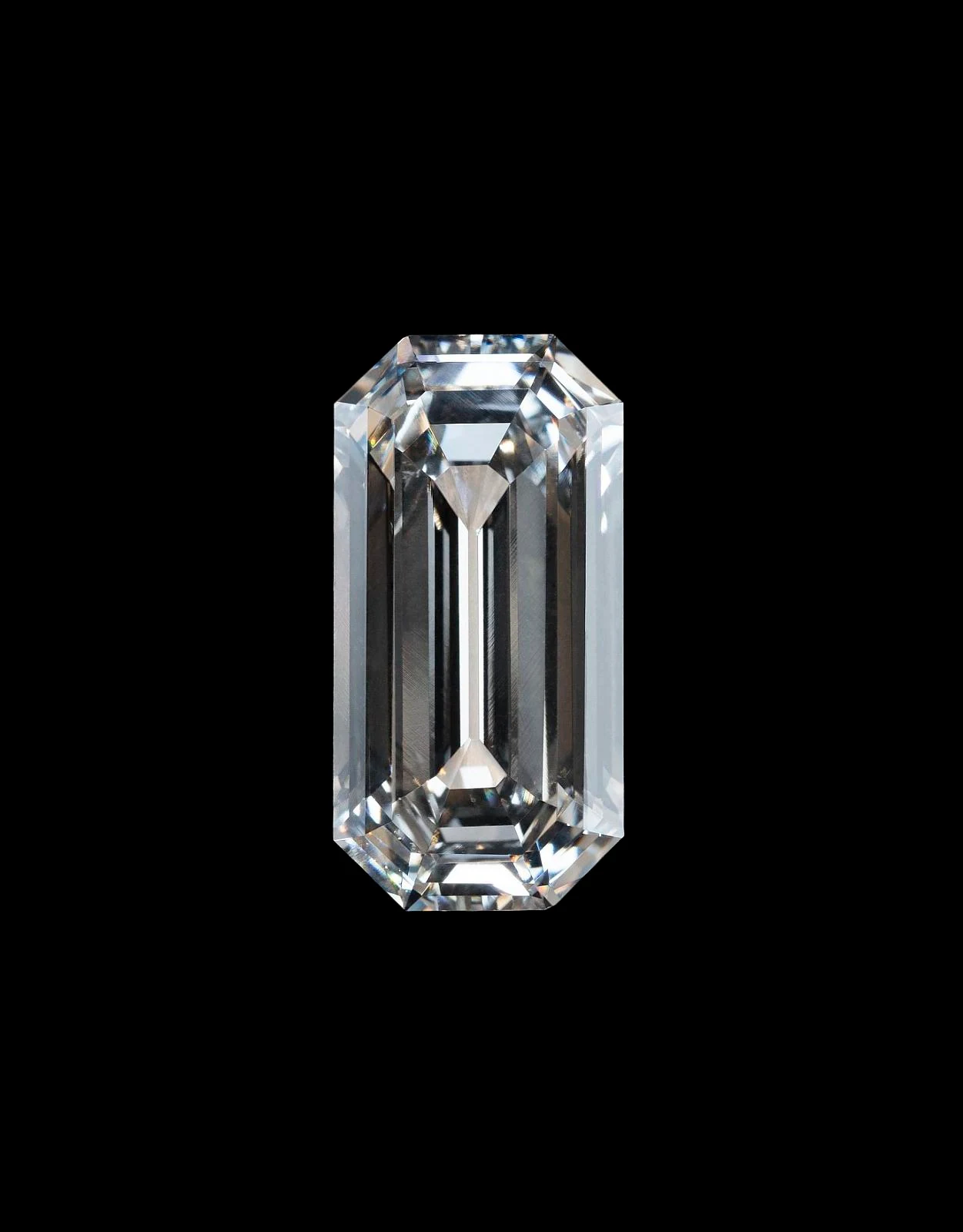
A faceted stone can carry substantial material in its pavilion, the lower portion beneath the girdle. Two stones with similar face-up outlines can therefore differ in depth and weight. When a setting hides the underside, a face-up photograph may not reveal that distinction. Ask for a side view and measurements rather than guessing from the headline carat figure.
Do not assume that the shallowest stone is automatically the best use of weight. GIA's cut-quality discussion explains windowing: unsuitable shallow pavilion facets can let a viewer see through the center instead of returning light attractively. Colored-gem cutting balances appearance, color and the available rough. The practical objective is an appealing, suitable stone, not the maximum number of millimeters regardless of optical performance.
Work through a fictional comparison
Suppose two fictional oval stones are described as follows. Stone A weighs 1.20 carats and measures 8.0 × 6.0 × 3.8 millimeters. Stone B weighs 1.35 carats and measures 7.5 × 5.5 × 4.8 millimeters. These invented figures illustrate a reading exercise, not a standard conversion for any species. B is heavier, yet A has the greater listed length and width.
If your priority is the visible outline, A deserves attention despite its lower weight. If your priority is fitting an existing setting, neither headline is enough: the exact outline, depth, girdle and setting tolerances require professional assessment. If you are judging beauty, inspect both under comparable conditions. The numbers identify questions worth asking; they do not choose a winner or establish condition, identity or quality.
- Circle the weight and label it mass.
- Underline length and width as the face-up measurements.
- Record depth separately rather than omitting it.
- Ask whether every figure is measured, approximate or supplied by another party.
- Compare photographs at a stated, consistent scale instead of equal-sized image boxes.
Mounted weights require especially clear language
When a gem cannot be safely removed from its setting, a professional may estimate its weight from dimensions, material density and assumptions about shape. GIA's published work on mounted colored gemstones uses shape factors and corrections for profile proportions. Such a calculation is not the same operation as putting the loose gem on a balance.
An estimate may be useful, but its limits should remain visible. Hidden depth, an unusual outline or uncertainty about the material can affect the assumptions. Do not delete 'estimated' when copying a description into your notes. Do not subtract a guessed setting weight from the ring's gross weight and present the remainder as a measured gemstone weight. If precision matters, discuss what can be established without unnecessary risk to the piece.
Make the comparison serve your actual purpose
Before shopping, decide whether the main question is visual presence, comfortable wear, a matched pair or fitting a setting. For a matched pair, matching carat weights alone may leave different outlines. For wear, extra depth can affect how high a gem sits. For a replacement, approximate millimeters are a starting point for a jeweler, not permission to force a stone into a mount.
Request one consistent record: material as stated, weight with its measurement status, length, width, depth, outline and relevant condition notes. Keep total jewelry weight separate from center-stone weight and any total gem weight. A clear record lets you compare like with like and exposes missing information before it becomes an expensive misunderstanding.
COLLECTOR FAQ
Questions worth asking
Will a higher-carat gem always look larger?+
No. Density and cutting proportions affect the relationship. A heavier stone can have a smaller face-up outline if more of its material is carried in depth.
Can I use a diamond size chart for every colored gem?+
No. Such a chart embeds assumptions about material and cut. Different densities, outlines and proportions can produce different weights at similar dimensions.
Is estimated weight automatically unreliable?+
Not automatically. It can be a useful professional estimate when its method and limits are clear. It should not be represented as a direct loose-stone measurement.
PRIMARY SOURCES
Verify the details.
GIA: 4Cs Carat Weight ↗GIA: Understanding Carat Weight ↗GIA: Colored Gemstone Value Factors—Design and Cut Quality ↗GIA: Estimating Weights of Mounted Colored Gemstones, Fall 1998, pp. 202–211 ↗GIA: Can I Submit a Mounted Colored Stone for Analysis? ↗KEEP LEARNING
Take the next step.
Explore the gemstone reference →Understand treatments and laboratory reports →Browse all collector articles →NumisTrends provides educational information, not financial, legal, tax, grading, or appraisal advice. Verify the exact item and current market before a transaction.