
Gemstones · 6 MIN READ
Caring for Doublets and Triplets: Protect the Joins, Not Just the Surface
An assembled gem has multiple components and joining materials. Its safest care plan must consider the complete object.
In this guide 6 sections + questions & sources
Learn what is assembled before cleaning it
A doublet joins two portions; a triplet has a three-part construction. The components can be the same material or different materials, and a joining layer may contribute color. These names describe construction, not a uniform recipe. They do not, by themselves, tell you which cleaning products or exposure conditions are appropriate.
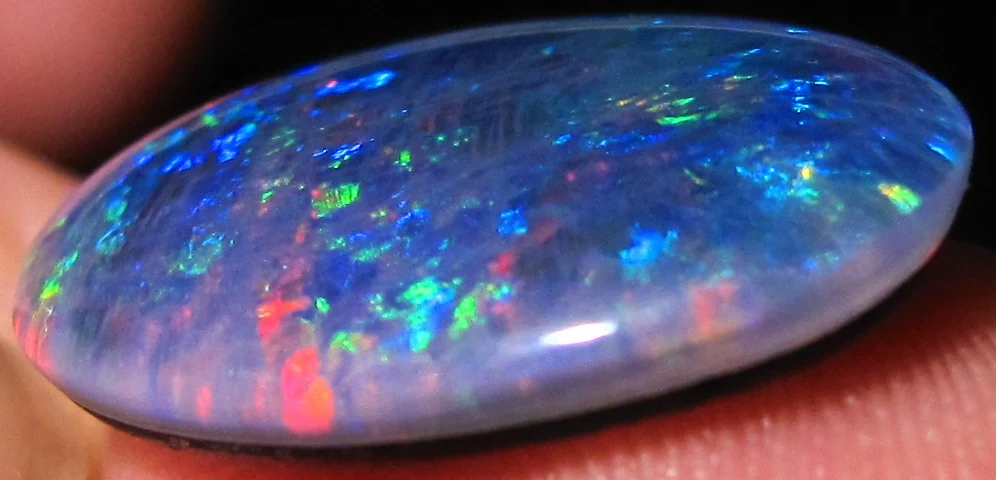
Opal gives a familiar example. GIA describes opal doublets as a thin opal layer attached to a backing, while triplets add a transparent upper component. Different materials can be used for the backing and top. Some assembled gems contain genuine natural material and are sold with clear disclosure. Their assembled character is still important for care, even when nobody is trying to imitate a more valuable single stone.
A durable top does not protect every interface
Looking at the exposed surface can hide the most vulnerable part of the object. A clear cap might cover the opal layer, but the edge of a joining plane may still be exposed. The backing, adhesive and setting can have care requirements different from those of the cap. A gemstone's Mohs number cannot establish how a particular adhesive will respond to prolonged water, solvent or heat.
Treat the piece as a system of components. Ask what the top and backing are, whether there are coatings or fillers, and whether the maker supplies specific cleaning instructions. If the answer is simply 'the top is quartz, so ordinary quartz care is fine,' the rest of the construction has not been addressed. This matters for pendants and earrings as well as rings.
Be especially careful with soaking and machines
GIA's opal care discussion warns that prolonged water exposure may weaken adhesives in doublets and triplets. That is not the same claim as saying one brief accidental splash destroys every assembled gem. It means that a long soak should not be the default cleaning plan, and that construction-specific instructions take precedence over a generic recommendation for the named gem material.
Ultrasonic cleaning introduces additional concerns because it uses high-frequency sound in a liquid environment and can generate heat and pressure. GIA warns that some filled or otherwise vulnerable gems can be damaged. Do not assume a household ultrasonic or steam cleaner is suitable for an unidentified assembled piece. A sparkling result is not worth an avoidable problem at a join that was already weak.
Make a conservative routine for a known piece
Begin with the maker's or an informed jeweler's instructions for that construction. If a brief damp wipe is permitted, use a soft, non-abrasive cloth and avoid turning it into an extended soak. Keep the piece away from heat while drying. If instructions are missing, especially for an older object with uncertain adhesives, ask for advice before applying liquids or cleaning compounds.
Store the piece separately so harder jewelry does not rub against it, and protect exposed edges from knocks. Put jewelry on after using personal-care products rather than wiping those products across the stone. These are precautionary habits, not a promise that every assembled material has identical chemical sensitivity. Keep the actual care instructions with the item so a future wearer or repairer does not guess from its appearance.
- Record the construction and known component materials.
- Keep prolonged soaking, steam and ultrasonic cleaning out of the routine unless a competent professional specifically approves them.
- Do not improvise solvent, alcohol, acetone or polishing-compound treatments.
- Protect edges and store items separately.
- Tell a repairer that the gem is assembled before any cleaning, polishing or heat work.
Respond to a possible separation without experimenting
Suppose a fictional opal triplet develops a pale area near its edge after years of wear. That appearance might raise a question about a join, but a photograph alone cannot determine whether it is separation, surface residue, a scratch or another feature. Stop the cleaning experiment. Record when you first noticed it, take clear overall and side views, and keep the piece safe for assessment.
Do not inject glue, press the layers together, heat the piece or try to dissolve a suspected adhesive. Those actions can make an examination or repair more difficult and may damage components. A qualified professional can consider whether the issue is reversible and what intervention, if any, is appropriate. A change in appearance is a reason to investigate, not a reason to force the most familiar repair.
Keep laboratory procedures separate from home care
A published laboratory examination may describe a controlled procedure that is not suitable as routine care for every similar object. For example, GIA documented a glass-and-quartz emerald imitation whose assembled structure was studied using several methods. That case is evidence that construction can be sophisticated; it is not permission to reproduce every examination step on an unknown piece at home.
Before buying an assembled gem, request both clear construction disclosure and a usable care plan. Before cleaning an existing one, confirm that its condition and history have been considered. If you cannot establish the components or the state of the joins, uncertainty itself is a reason to proceed cautiously. Good care protects the complete object instead of assuming that its most visible layer tells the whole story.
COLLECTOR FAQ
Questions worth asking
Does doublet mean fake?+
No. Doublet describes an assembled construction. It can contain natural gem material and be honestly disclosed. Its components, presentation and the identity it is sold under determine the relevant questions.
Is every water contact dangerous for an opal triplet?+
Not necessarily. GIA specifically warns about prolonged exposure weakening adhesive. Follow instructions for the actual construction and condition; do not turn a general warning into a guaranteed damage threshold.
Can I repair a lifting layer with household glue?+
Do not attempt that. Adhesive choice, component condition and alignment require assessment. Additional glue or solvent can complicate a later repair and may damage the piece.
PRIMARY SOURCES
Verify the details.
GIA: Opal Quality Factors ↗GIA: October Birthstones—Opal Care and Cleaning ↗GIA: Ultrasonic Cleaners for Gems—What You Need to Know ↗GIA: Unusual Glass-and-Quartz Triplet Imitation of Emerald (2022) ↗KEEP LEARNING
Take the next step.
Explore the gemstone reference →Understand treatments and laboratory reports →Browse all collector articles →NumisTrends provides educational information, not financial, legal, tax, grading, or appraisal advice. Verify the exact item and current market before a transaction.