
Gemstones · 6 MIN READ
Amber or Copal? Ask Better Questions About Fossil Resin
Separate a resin’s identity, geological history and treatment story without destructive home tests.
In this guide 6 sections + questions & sources
Resin is the starting point, not the complete story
Amber is associated with ancient tree resin, while copal is generally used for less mature resin material. GIA’s introductory description presents an age-based distinction, including a million-year dividing line. That is an educational naming convention, not a dating measurement for a loose object. A seller repeating the word amber has not thereby demonstrated when that particular piece formed.
Start a record with three separate questions: what material was identified, what evidence supports its geological history, and what has happened to it since formation? These questions can have different answers or different levels of certainty. A collector can appreciate an attractive resin specimen while accurately recording that its age or locality remains unverified. There is no need to turn an appealing object into a more specific scientific claim than the evidence supports.
Maturity is more than a calendar label
GIA’s research on treated green amber explains that resin structure reflects both age and its temperature-and-pressure history. Polymerization and related changes affect the material, and laboratory treatment can accelerate some of those changes. The practical lesson is limited but important: a resin’s present physical or spectroscopic behavior is not simply a clock that anyone can read from its appearance.
If a description says “aged,” ask whether the writer means geological formation, deliberate treatment or merely an antique object. Those are different histories. A carving made a century ago could have been fashioned from much older resin; an old collection label might still contain an uncertain identification. Keep the manufacturing date, acquisition date and claimed resin age in separate fields so one date does not quietly stand in for another.
Do not sacrifice the specimen to a demonstration
A hot needle or solvent can leave a permanent mark, and a damaged spot does not become more acceptable because it is on the back. GIA warns that amber can burn at relatively low temperatures and can be harmed by chemicals. Its care guidance favors mild soap and warm water for identified amber, rather than aggressive cleaning or experimental treatment.
For an unknown object, a composite, or a specimen with fragile surfaces or attachments, even cleaning should wait until an appropriate method is confirmed. Do not apply the care directions for identified amber to every resin-like object. Ask a qualified examiner what non-destructive examination is feasible and whether any proposed sampling or treatment could change the specimen. Obtain the owner’s informed permission before an examination that can leave a mark.
Treat the inclusion and the surrounding material as separate claims
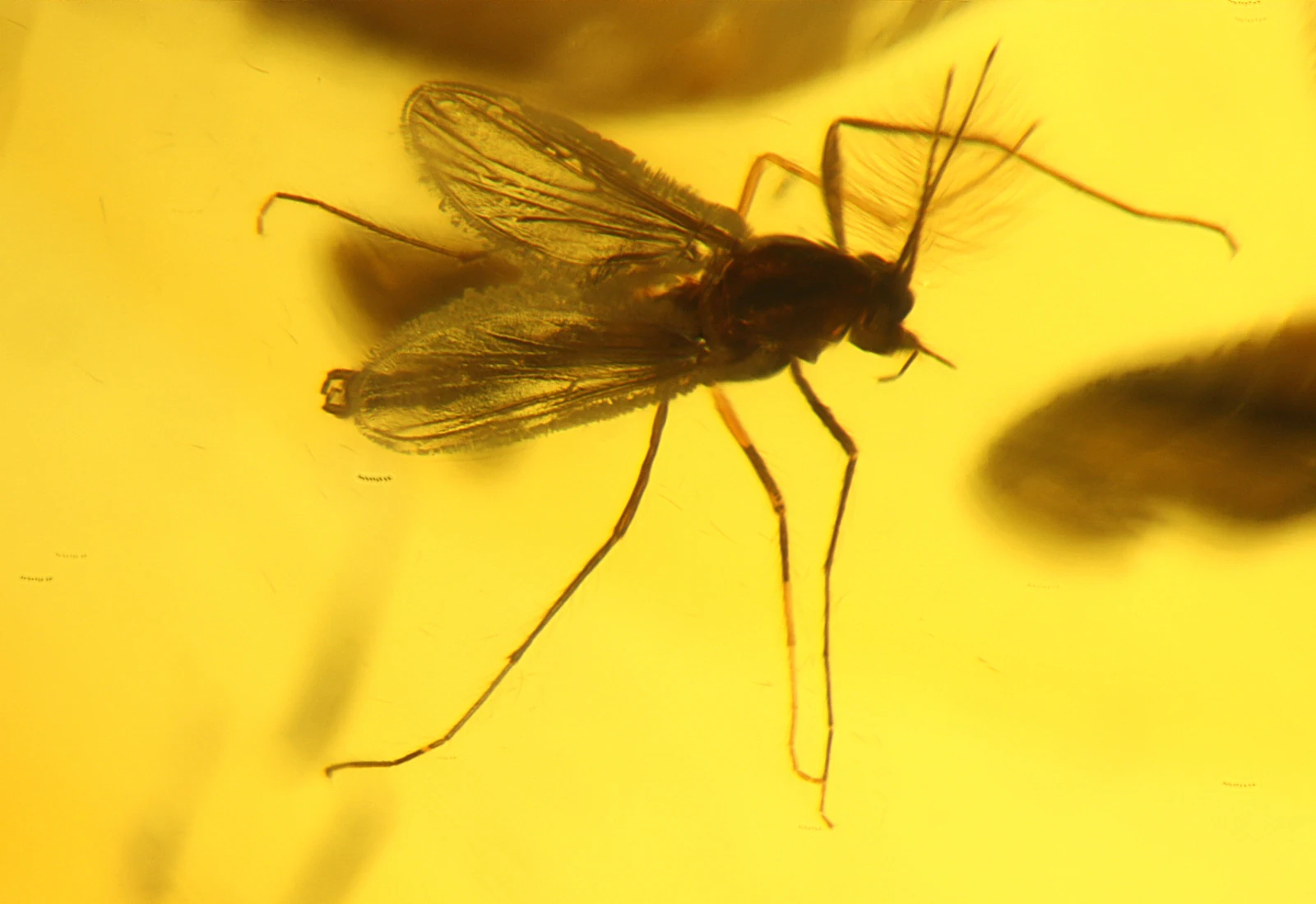
An insect-shaped object is a reason to look more carefully, not a shortcut to declaring geological authenticity. Write what the image supports: an apparent enclosed object, its position, visible detail and any areas that cannot be seen. Do not supply a species name or geological age by matching a dramatic photograph online. The identification of the surrounding resin and the interpretation of an inclusion are separate tasks.
For a specimen purchased primarily because of an inclusion, ask what specialist examination supports that claim. Request views of the entire object as well as the close-up, and keep the photographs linked to the same specimen number. A highly enlarged image without an overall view can make a tiny feature difficult to locate later. This documentation routine organizes evidence; it does not authenticate the organism or prove how it entered the material.
A fictional listing with three different dates
Consider a fictional pendant advertised as “Baltic amber, Victorian, collected in 1978.” The first phrase combines material and locality claims. Victorian concerns the object’s attributed period of manufacture. The final year concerns collection history. Even if a receipt confirms a 1978 purchase, it does not independently establish the other two statements. Record precisely what the receipt supports.
A useful follow-up asks for the identification basis, any treatment or reconstruction disclosure, the evidence for the period attribution and the source of the locality statement. The answers might range from a laboratory conclusion to family recollection. Label those evidence types rather than blending them into one confident narrative. If the material or inclusion is the main reason for buying, make resolution of that particular uncertainty part of the purchasing decision.
- Separate resin identity, claimed geological age and object age.
- Keep locality evidence distinct from the location of purchase.
- Record treatments, construction and condition questions without supplying missing answers.
Preserve a modest, useful conclusion
A good final description may be less dramatic than the original advertisement. For example: “Resin pendant sold as Baltic amber; 1978 purchase receipt retained; earlier manufacture and geological locality not independently established.” That is not an accusation. It is a clear description of the evidence currently available, leaving room for a future specialist to add information without undoing an invented history.
This lesson does not set a universal age cutoff for all uses of the word copal, date any specimen, or provide a resin identification procedure. Institutional introductions and research papers serve different purposes, so a simplified naming rule should not be stretched into a universal diagnostic test. Enjoy the object, preserve its documents and let the strength of each claim match the strength of its support.
COLLECTOR FAQ
Questions worth asking
Does calling a piece amber establish an exact age?+
No. A material label is not a dating result for that specimen. Geological age, resin maturity, the age of a carving and the date it entered a collection should be recorded separately.
Should I try a hot-pin or solvent test?+
No. Such demonstrations can damage the object and do not provide the complete evidence needed for its identity and history. Discuss appropriate examination with a qualified professional.
Does an apparent insect prove ancient amber?+
No. Document the feature without assuming what it is or how it became enclosed. The resin identification and any biological or geological interpretation need their own evidence.
PRIMARY SOURCES
Verify the details.
GIA: Amber Description ↗GIA: Characterization of Green Amber ↗GIA: Amber Care and Cleaning ↗KEEP LEARNING
Take the next step.
Explore the gemstone reference →Understand treatments and laboratory reports →Browse all collector articles →NumisTrends provides educational information, not financial, legal, tax, grading, or appraisal advice. Verify the exact item and current market before a transaction.